
Our chosen book this month is… Ethan Hawke’s A Bright Ray of Darkness. We really loved this book when we first read it about a year ago, and upon a revisit we knew it aligned with our ethos here at The Ploughman’s. Hawke is not only an incredible actor, but a great writer too. We hope you enjoyed this under-appreciated treasure just as much as we did!
Also, although this may seem unrelated, please beware that there are spoilers for The Walking Dead / The One’s Who Live. It will make sense later – enjoy : )

November’s Book Club. A Bright Ray of Darkness by Ethan Hawke
What makes Ethan Hawke’s A Bright Ray Of Darkness so interesting is that we, as readers, are placed amidst the perspective of a man who is going through a depressive, self-destructive episode. In turn, this means that our understanding of Broadway, of New York City and of the characters that William interacts with is slightly warped by the mind of a man who seeks comfort, absolution and advice.
This may be why, at least for me, the novel seems to excel in the parts detailing William’s conversations. Whilst the prose is memorable for its introspective thinking and interesting details of daily life as an actor, the novel’s dialogue allows for the reader to see how the outside world exists and views William.
Perhaps the passage which stood out to me the most in this novel is placed in the chapter entitled “Act V: If Wishes Were Horses”. It is a recount of a conversation between William and his father, just after his father has come to watch him perform Shakespeare’s Henry IV. Being moved by William’s incredible execution of the character Hotspur, his father is prompted to apologise for not supporting William’s dreams of becoming an actor. Within the apology, he begins to reflect on how he has spent his life working for an insurance company. He says:
“but there will be no need for insurance in heaven. None at all. And there will be so much need for poetry and songs and jokes. People will value what you’ve learnt. It doesn’t matter if you can make a living. Shakespeare will be important. You will be so valuable, William. And I will just sit there listening, realizing how I’ve misspent my life.” p. 120
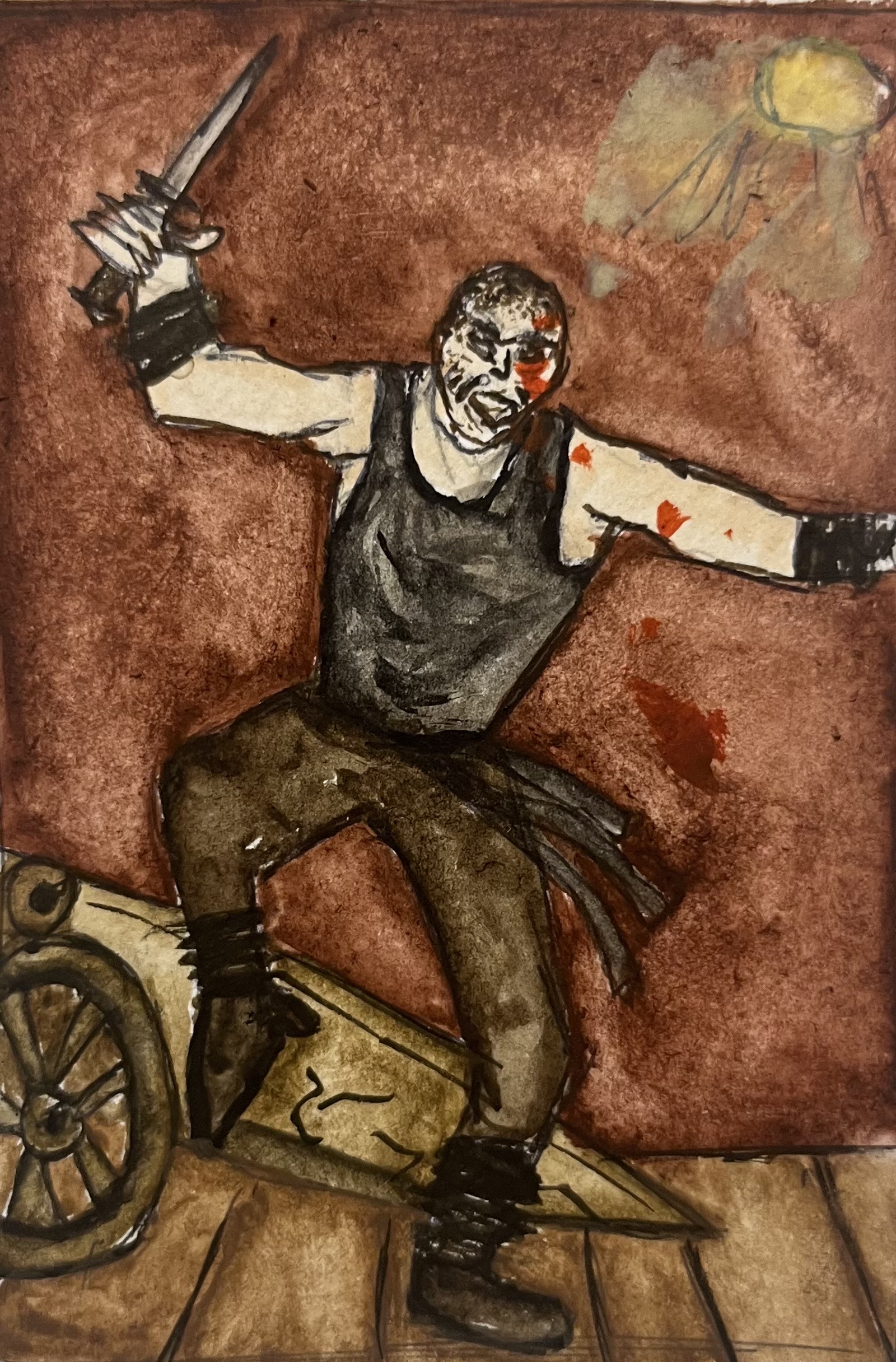
The certainty with which he says this with, the solemn realization that what his son pursued in life was correct, that his own path has amounted to nothing more than a waste of his days is deeply profound. In crafting this beautiful image of a heaven filled with poets, artists, actors and dreamers, and then placing it center in an honest and mournful dialogue between father and son, Hawke presents it as the only truth of their adult lives.
It is that age old question of where you decide to define success – within the traditional accumulation of wealth, or within something else. For William’s father, after a life spent figuring it out, the answer is clear. Wealth amounts to nothing in the end. He has spent his life not only chasing financial security, but financial success. And then he looks down at his son, who right now is drinking far too much and sleeping far too little, and he knows, despite his child’s current tumultuous state, William has defined success correctly.
This scene, this idea, reminds me of a monologue from a spinoff of a popular TV show, The Walking Dead, which aired a couple of years back. It is of a similar concept – of somebody looking back at their life and realizing that they should have spent their days devoting themselves to something truly meaningful.
When we meet this character she is a sculptor and a painter who lives in squalor. She is content in spending her days devoting herself to her art. Despite living in an apocalyptic world, it seemingly consumes her being, and nothing else matters. As the years pass, things change and she finds herself to have traded her life as an artist for a rather high-up position in the army. She is eventually killed on duty. Upon her imminent death she speaks:
“I wish I died an artist. It was never about survival in that life. It was just about truth. And this is mine, the end of my story.”
It is a deeply tragic scene, where she realizes what defines her life was not her passion, her art that she abandoned, but her rank in the army. The things she did, who her work made her be, that engulfed her being and defined her life.
Quite the odd comparison of scenes, I know, but they both carry the same message. They both remind us, in their reflections of lives misspent, how we should live ours. I mean, we all know it. I am writing this right now and I know this, yet I still spend a couple hours each day applying to corporate jobs that have no alignment with my passions. It seems to be a constant of humanity, a striving for security at any cost. Even at the cost of who you are.
But, as William’s father puts it, there is a need for artists in heaven. There is a necessity for poets. Musicians, actors and comedians will be vital for the eternal existence of our souls. And insurance brokers, army generals, I’m not quite so sure.
The Ploughman’s Community Comments:
Trevor, London: Ethan Hawke’s writing reminds me of Kerouac, Hemingway, Hunter S. Thompson … I am so glad to have read this book and discovered his writing.
Harry, Brazil: I found the conversation that William has with his mother very interesting. It is when she has stolen his co*e, and on the surface it is a rather humorous scene. However, she speaks so openly an honestly to him about the struggles of being a women which I found to be such a interesting dialogue between mother and son.
Lucy, USA: Such a great novel. I will have to read more Ethan Hawke.


 The Ploughman's
Leave a comment